

 24Hotline:18962699833
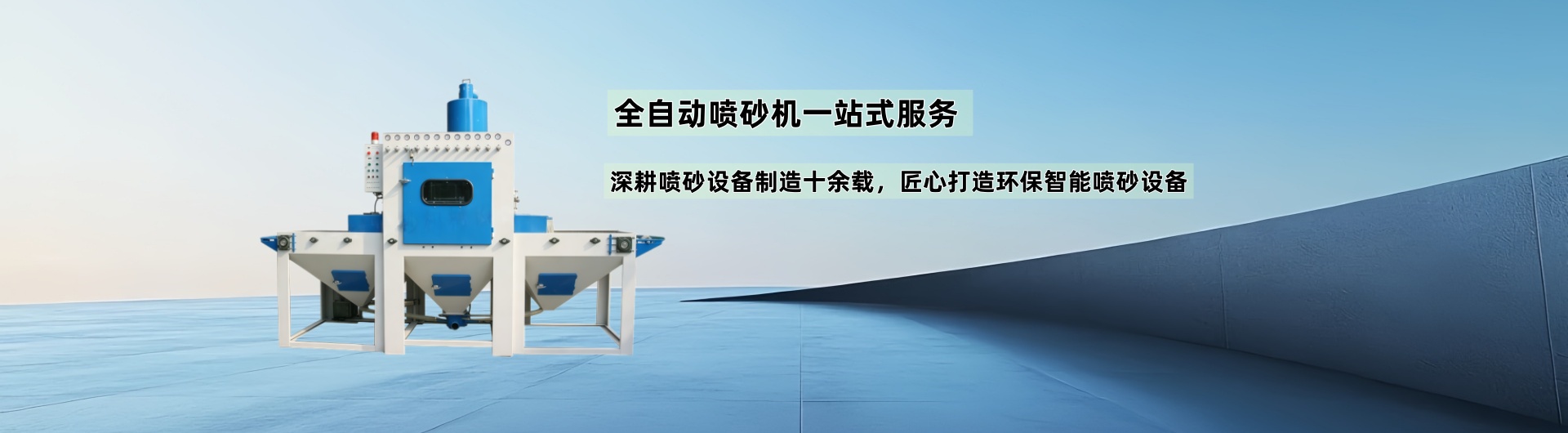

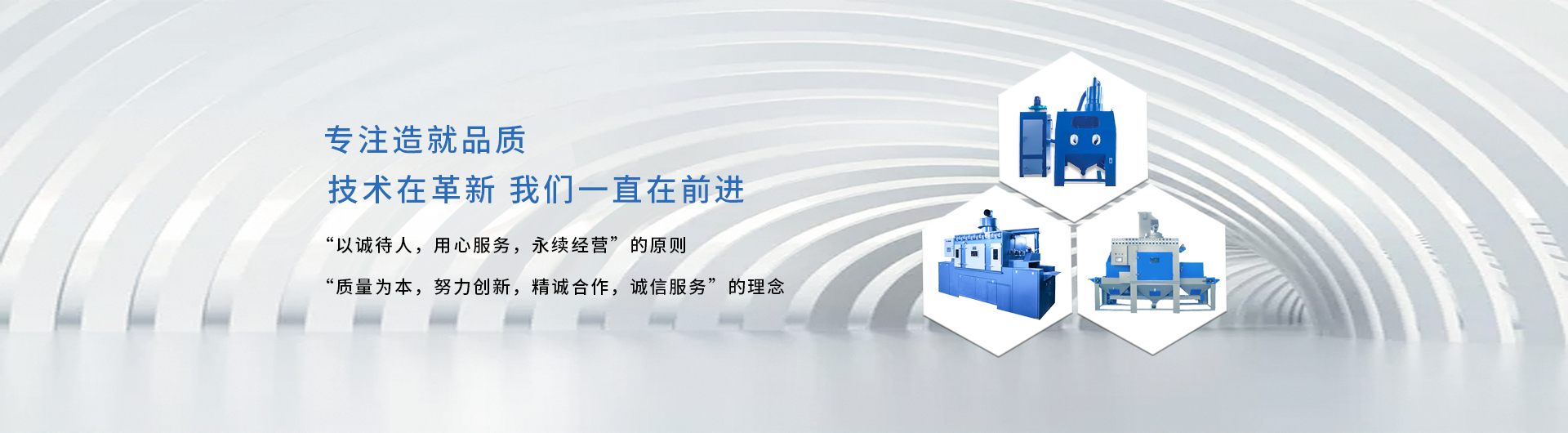
What should be paid attention to when using automatic sandblasting machine for surface treatment of hardware parts?
Matters needing attention in surface treatment of automatic sandblasting machine for hardware parts
The surface of hardware parts is treated by automatic sandblasting machine, and the core goal is to achieve the effects of deburring, derusting, descaling and surface roughening, while ensuring the dimensional accuracy, surface consistency and equipment operation safety of the parts. It is necessary to control the details of the whole process around the five core dimensions of process parameter matching, fixture design, equipment operation specification, quality control and safety protection, as follows:
First, prenatal preparation and precise setting of process parameters
Abrasive selection and particle size matching
According to the material of hardware parts (carbon steel, stainless steel, aluminum alloy, etc.) and the treatment target, abrasive is selected: brown corundum (high hardness and strong cutting power) is preferred for rust removal and scale removal; Surface finishing, deburring and glass beads (round and angular, to avoid scratching parts); Ceramic sand is selected for soft metals such as aluminum alloy (low wear rate and no residual impurities).
Abrasive granularity should match the accuracy of parts: for precision hardware (such as stamping parts and fasteners), choose 100-180 mesh fine abrasive to prevent dimensional deviation caused by excessive sandblasting; 20-80 mesh coarse abrasive is selected for rough surface treatment to improve processing efficiency.
Abrasive should be kept dry and clean, and the moisture content should be ≤0.5%, so as to avoid caking and blocking the spray gun; Regularly screen abrasives to remove broken particles and impurities to prevent scratching the surface of parts.
Debugging and verification of process parameters
Sandblasting pressure: according to the thickness and hardness of parts, the pressure of carbon steel parts should be controlled at 0.4-0.6MPa, and the pressure of soft parts such as aluminum alloy should be reduced to 0.2-0.3MPa. If the pressure is too high, it will easily lead to deformation and surface erosion of parts, while if it is too low, the treatment effect will be poor.
Sandblasting distance and angle: the distance between the spray gun and the surface of the part shall be kept at 100-200mm, and the angle shall be controlled at 45–75; For parts with blind holes and grooves, it is necessary to adjust the spray gun angle to ensure full coverage and avoid forming "dead angle" untreated areas.
Conveying speed and sandblasting time: the speed of the conveyor belt or the rotating speed of the rotary table of the automatic sandblasting machine should match the sandblasting time. Before batch processing, the first piece should be tested. By adjusting the parameters (such as the speed of 0.5–2m/min), the surface roughness Ra value can meet the requirements (usually Ra 1.6–6.3μ m), and at the same time, the dullness of the edges and corners of the parts caused by too long sandblasting time can be avoided.
Fixture customization and parts positioning
Special tooling is designed for hardware parts with different shapes: small parts are fixed with hollow fixtures to prevent parts from tumbling when sandblasting; Parts with threads and holes need to be shielded and protected by rubber plugs and silicone rubber sleeves, so as to prevent abrasive from entering the thread gaps or holes and causing blockage and wear.
Wear rubber or polyurethane is preferred as the tool material, which can not only prevent the clamping deformation of parts, but also reduce the tool loss caused by abrasive impact; Fixture should ensure accurate positioning of parts, no shaking and displacement when running synchronously with conveyor belt, and even surface treatment.
Second, the equipment operation and operation process specification
Equipment inspection and no-load trial operation
Check the pressure system, dust removal system and conveying system of the sandblasting machine before starting: make sure that the pressure of the air compressor is stable and there is no accumulated water in the air storage tank; The filter element of the dust collector is clean and unobstructed, and the fan operates normally (the dust removal efficiency should be ≥95% to avoid dust overflow); The conveyor belt and the swing mechanism of the spray gun are free from jamming, and the nozzle of the spray gun is free from abrasion and blockage.
Carry out no-load test run for 5-10 minutes: check whether the abrasive conveying is smooth, whether the spray angle of the spray gun is accurate, and whether the sealing performance of the equipment is good (no abrasive leakage and dust escape).
Control of feeding and running process
Parts should be placed evenly to avoid stacking and overlapping, and ensure that the surface of each part can be evenly covered by abrasive; For special-shaped parts, it is necessary to adjust the placement direction so that the surface to be treated faces the spray gun.
Monitor the equipment status in real time during operation: observe whether the spray gun sprays evenly and whether the abrasive circulation is normal; If the spray gun is blocked, it should be stopped immediately and cleaned after pressure relief. It is forbidden to operate under pressure.
Strictly control the workshop environment, keep the temperature at 15-30℃ and the humidity ≤60%, so as to prevent the parts from rusting after sandblasting due to the humid environment, especially the carbon steel parts should be rusted in time after sandblasting.
Third, quality inspection and process control
First article inspection and batch sampling inspection
After the first trial spray, the surface quality of the parts needs to be tested: whether the Ra value reaches the standard is detected by a roughness meter, and whether there are defects such as sandblasting, missed spray, scratch and deformation on the surface is visually inspected; Parts with dimensional tolerances need to be measured with calipers and micrometers to confirm that there is no deviation.
In the process of mass production, sampling shall be conducted once every 30 minutes, and the sampling ratio shall be ≥5%. Process parameters shall be adjusted in time to avoid batch disqualification.
Post-treatment and antirust protection
After sandblasting, the residual abrasive on the surface of the hardware parts should be purged with compressed air immediately, or the abrasive particles in the gap should be cleaned by vibrating machine and brush; Precision parts can be cleaned by ultrasonic wave to ensure clean surface.
Rust-prone parts such as carbon steel and cast iron shall be rusted within 2 hours after sandblasting (such as spraying antirust oil and passivation treatment); Stainless steel parts need to be degreased and cleaned to avoid residual abrasives affecting the adhesion of subsequent electroplating, spraying and other processes.
Four, equipment maintenance and maintenance
Daily maintenance and cleaning
After each shift, clean the residual abrasive in the sandblasting machine, and clean the nozzle of the spray gun and the inner wall of the sandblasting room; Check the filter element of the dust collector regularly, and clean or replace it in time when it is blocked to ensure the dust removal effect.
Check the abrasive circulation system every week to clean up the impurities in the separator; Lubricate the transmission parts of the equipment (roller of conveyor belt and swing shaft of spray gun) to ensure smooth operation.
Check the equipment seals (rubber sealing rings and sealing strips) every month, and replace them in time when they are aged and damaged to prevent abrasive leakage and dust escape.
Wearable parts replacement
Spray gun nozzle is a wearing part, which will lead to the deviation of spray range and pressure drop after wear, so it needs to be checked regularly, and it should be replaced immediately when the aperture wear exceeds 0.5mm; Replace the abrasive conveying pipe in time when it is damaged to avoid abrasive leakage.
V. Safety Protection and Operation Specification
Personal protection requirements
Operators must wear a full set of protective equipment: impact goggles, dust mask, anti-static overalls, wear rubber gloves, and anti-smashing labor protection shoes. It is forbidden to look directly at the spray nozzle of the spray gun with naked eyes to prevent abrasive splashing from injuring people.
It is forbidden to open the door of the sandblasting room when the equipment is running. If you need to adjust parts or parameters, you must stop the machine, relieve pressure and turn off the abrasive conveying system first.
Equipment safety and environmental protection
Sandblasting machine should be grounded reliably to prevent dust explosion caused by static electricity accumulation; Flammable and explosive articles are prohibited to be piled up around the equipment, and fire fighting equipment such as dry powder fire extinguishers are equipped.
The dust removal system needs to be inspected regularly to ensure that the dust reaches the discharge standard (in line with the Comprehensive Emission Standard of Air Pollutants) and avoid dust pollution to the workshop environment; The collected dust should be sealed and stored, and handed over to professional institutions for treatment. It is forbidden to dump it at will.
Operation qualification and training
Operators should be professionally trained and hold relevant certificates, and be familiar with equipment principles, process parameter adjustment methods and emergency treatment procedures; Non-professionals are strictly forbidden to operate the equipment or modify the parameters without authorization.
