

 24Hotline:18962699833
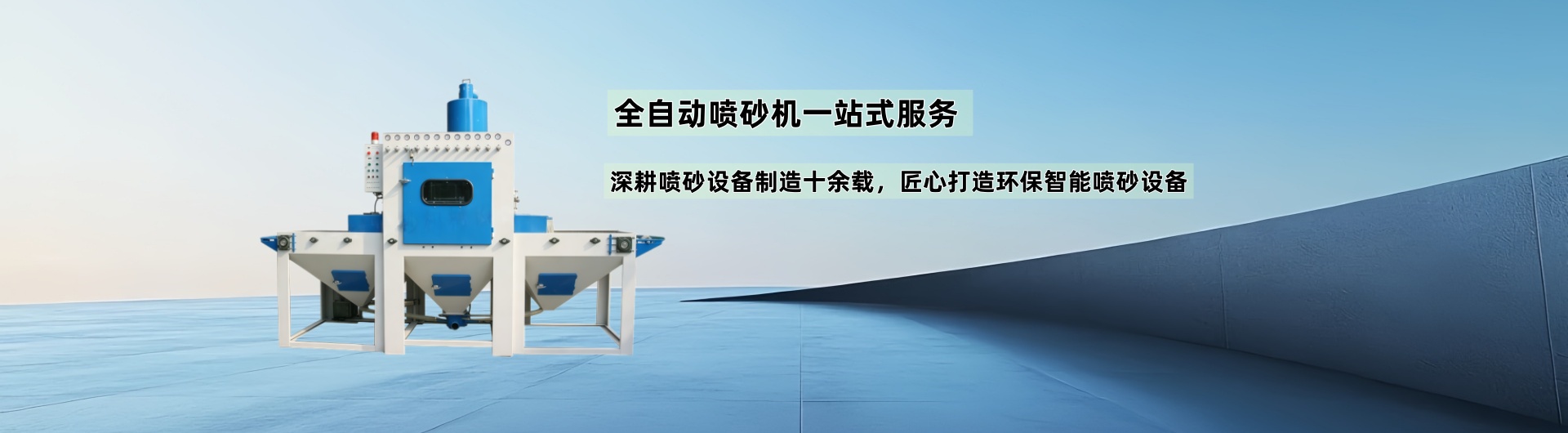

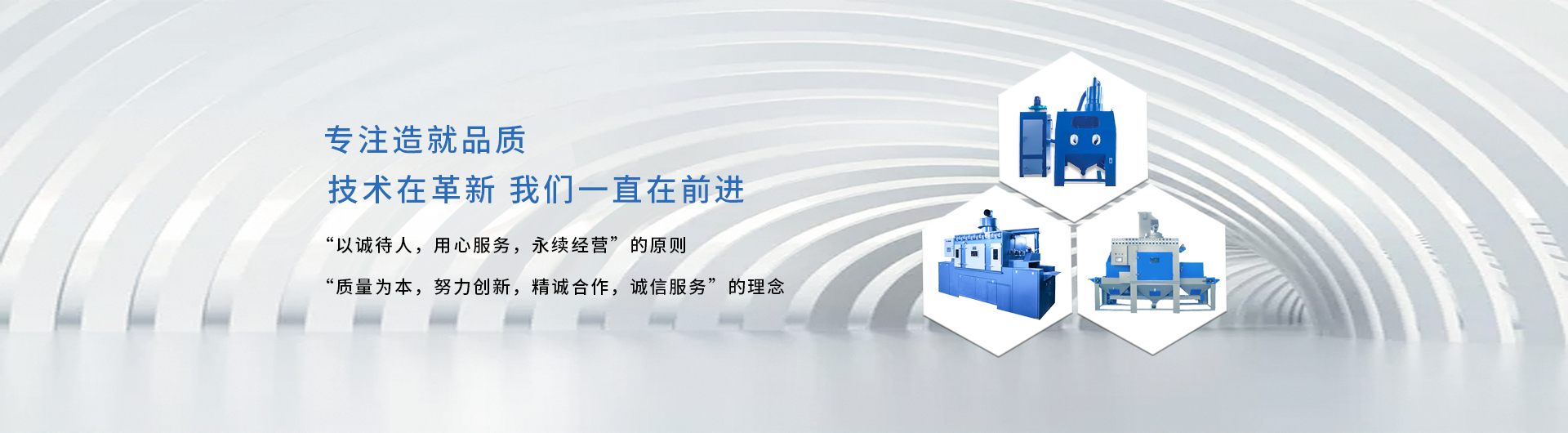
What problems should be paid attention to when installing automatic sandblasting machine in Kunshan Hardware Processing Factory?
When installing the automatic sandblasting machine in Kunshan Hardware Processing Factory, it is necessary to comprehensively consider the workshop environment, production requirements, safety specifications and other factors to avoid inefficiency, potential safety hazards or equipment failure caused by improper installation. The following issues need to be paid attention to:
1. Site planning and layout: adapt to workshop conditions to ensure smooth operation.
Space size and bearing capacity
Automatic sandblasting machines (especially large-scale equipment such as walk-through machines and rotary tables) need sufficient installation space, and the length, width and height of the equipment should be measured in advance (including the operation and maintenance area, usually 1.5-2m space should be reserved around the equipment), so as to ensure that the dimensions of workshop passages and doors can meet the requirements of equipment entry and subsequent maintenance.
When the equipment is running (including sand and workpiece weight), there are requirements for the ground bearing (generally ≥500kg/㎡). If the workshop ground is ordinary cement ground, hardening treatment (such as pouring concrete cushion) should be done in advance to avoid the ground settlement and inclination caused by long-term operation of the equipment.
Surrounding environment isolation
Sand blasting will produce a small amount of dust (even if equipped with dust removal system), so it is necessary to avoid being directly adjacent to precision machining areas (such as CNC machining and assembly line). It is suggested to set up independent compartments or use enclosures to prevent dust from polluting the workpieces in other processes.
Keep away from fire sources, inflammable and explosive articles (such as paint and cleaning agent storage areas), and the compressed air used for sand blasting may carry static electricity, so it is necessary to keep a safe distance (at least 5 meters).
Second, supporting infrastructure: ensure the stable operation of equipment.
electric power supply
The power of automatic sandblasting machine (including sandblasting host, conveyor belt, dust removal system and control system) is relatively high (about 3-5kW for small equipment, and 10-20kW for large pass-through type). It is necessary to configure an independent power supply circuit according to the nameplate of the equipment to avoid voltage instability caused by sharing lines with other high-power equipment (such as punching machines and welding machines).
Grounding protection must be reliable: the metal shell and sandblasting cabin of the equipment should be grounded separately (grounding resistance ≤4Ω) to prevent safety accidents caused by motor leakage or static accumulation.
compressed-air system
Sandblasting depends on stable compressed air (the pressure usually needs 0.4-0.8MPa, and the flow rate depends on the number of spray guns, such as a single gun needs ≥ 0.6 m/min). It is necessary to ensure that the displacement and pressure of the air compressor in the workshop meet the equipment requirements, and the diameter of the air pipe is adapted (it is recommended to ≥DN25) to avoid pressure loss caused by too long pipeline.
Compressed air needs to be dried and filtered: an oil-water separator (three-stage filtration) is installed to prevent moisture and oil stains from entering the sandblasting chamber to pollute the abrasive or workpiece surface (especially for precision hardware, oil stains may lead to the decrease of adhesion in subsequent electroplating and painting).
Dust removal and waste gas treatment
Efficient dust removal system must be matched: the dust removal air volume of automatic sandblasting machine should match the volume of sandblasting cabin (usually the air volume per cubic meter of cabin is ≥ 2,000 m/h), so it is recommended to choose bag dust collector (the filtration accuracy is ≥1μm) and clean the filter bag regularly to ensure the dust emission concentration is ≤ 10 mg/m (in line with the Comprehensive Emission Standard for Air Pollutants).
When handling special abrasives (such as copper ore and glass beads) or workpieces (such as aluminum powder produced by aluminum alloy sandblasting), attention should be paid to the flammability of dust: aluminum powder belongs to flammable and explosive dust, and anti-static filter bags should be used in the dust removal system, and the equipment should be grounded to avoid explosion caused by dust accumulation.
Third, the details of equipment installation: ensuring accuracy and safety.
Level and fixation of equipment
When installing, it is necessary to calibrate the equipment fuselage with a spirit level (error ≤0.5mm/m). Especially for the walk-through and turntable equipment, the tilt of the fuselage may lead to the deviation of workpiece transportation, uneven sandblasting, and even damage the equipment due to material jamming.
Large-scale equipment needs to be fixed on the ground by expansion bolts, so as to prevent the equipment from shifting due to vibration (sand blasting impact and motor operation) during operation, which will affect the positioning accuracy of the spray gun.
Commissioning of abrasive circulation system
Abrasive recovery (such as spiral conveying and negative pressure recovery) of automatic sandblasting machine should be ensured to be smooth: check whether there are any blockage and air leakage points in the pipeline to avoid abrasive accumulation in the bilge or pipeline, resulting in insufficient sand supply ("empty spraying") or abrasive waste.
Before the first use, it is necessary to adjust the abrasive particle size and filling amount according to the workpiece material and processing requirements: for example, 80-120 mesh glass beads are used to process small stainless steel pieces, and 40-60 mesh steel grit is used to remove rust, and the filling amount should be 10-15cm to cover the bottom of the sandblasting cabin. Too much will easily lead to poor circulation, while too little will affect the sandblasting efficiency.
Calibration of spray gun and conveying system
The angle and distance of the spray gun need to be accurately positioned: according to the shape of the workpiece (such as plane, curved surface and hole position), the position of the spray gun (usually 100-200mm away from the workpiece, with an angle of 30-60) should be adjusted, and the uniformity of sandblasting should be confirmed through trial spraying to avoid local overspray (resulting in out-of-tolerance of workpiece size) or missed spraying.
The speed of conveying system (conveyor belt, jig) should match the sandblasting time: when debugging, use standard workpiece to ensure that the surface treatment effect of workpiece reaches the standard at the set speed (such as the roughness Ra value meets the requirements), so as to avoid incomplete treatment due to too fast speed or waste of efficiency due to too slow speed.
IV. Safety and Compliance: Conforming to production specifications
safety device
The equipment must be equipped with perfect safety interlock: the sandblasting door is linked with the operation of the equipment and automatically stops when the door is opened; The emergency stop button should be installed in the easy-to-reach position around the operation panel and equipment to ensure that the power can be cut off quickly in case of emergency.
Warning signs shall be set in the operation area, such as "Protective glasses must be worn", "Beware of dust" and "High pressure danger", etc. Operators shall be equipped with special protective equipment (dust mask, goggles and wear-resistant gloves).
Environmental protection and occupational health compliance
The exhaust port of the dust removal system should be far away from the workshop air inlet or residential area to avoid secondary dust pollution; If the local environmental protection requirements are strict (for example, some areas in Kunshan belong to environmentally sensitive areas), it is necessary to go through the EIA filing in advance to ensure that the emissions meet the standards.
The workshop shall regularly detect the dust concentration (at least once a month) to ensure that it conforms to the occupational exposure limits of Hazardous Factors in the Workplace (total dust ≤ 8 mg/m, respirable dust ≤ 4 mg/m) to protect workers' health.
V. Convenience of later maintenance: reduce long-term operating costs.
Reserved maintenance channel: The vulnerable parts of the equipment such as motor, reducer, filter bag and spray gun should be easy to disassemble and replace, so as to avoid maintenance difficulties caused by limited space during installation (for example, the dust removal box needs to reserve space for opening the door and taking out the filter bag).
Formulate equipment operation regulations: after installation, operators need to be trained, and the procedures of pre-startup inspection (such as air pressure and abrasive amount), in-operation monitoring (such as abnormal noise and dust leakage) and cleaning after shutdown (such as residual abrasive and filter bag cleaning) should be defined, so as to prolong the service life of equipment.
summary
The core of installing automatic sandblasting machine in Kunshan Hardware Processing Factory is "adaptability+safety+maintainability": it is necessary to configure infrastructure in combination with workshop space and workpiece characteristics, ensure sandblasting accuracy through precise installation, and strictly abide by environmental protection and safety specifications, so as to give full play to the efficiency advantage of equipment and avoid production interruption or cost overrun caused by installation problems in the later period.
