

 24Hotline:18962699833
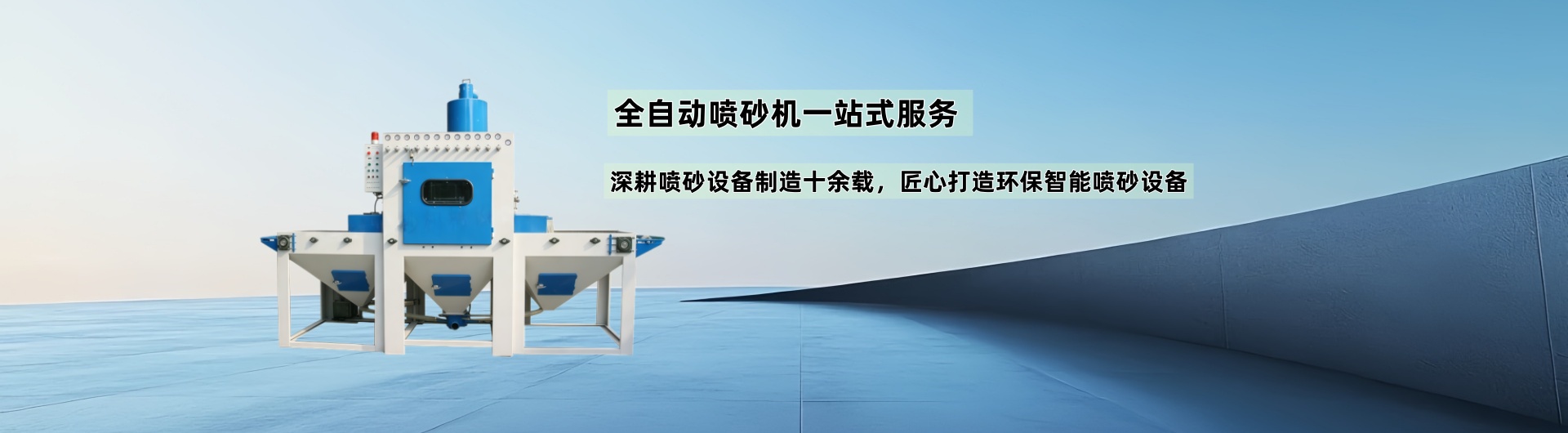
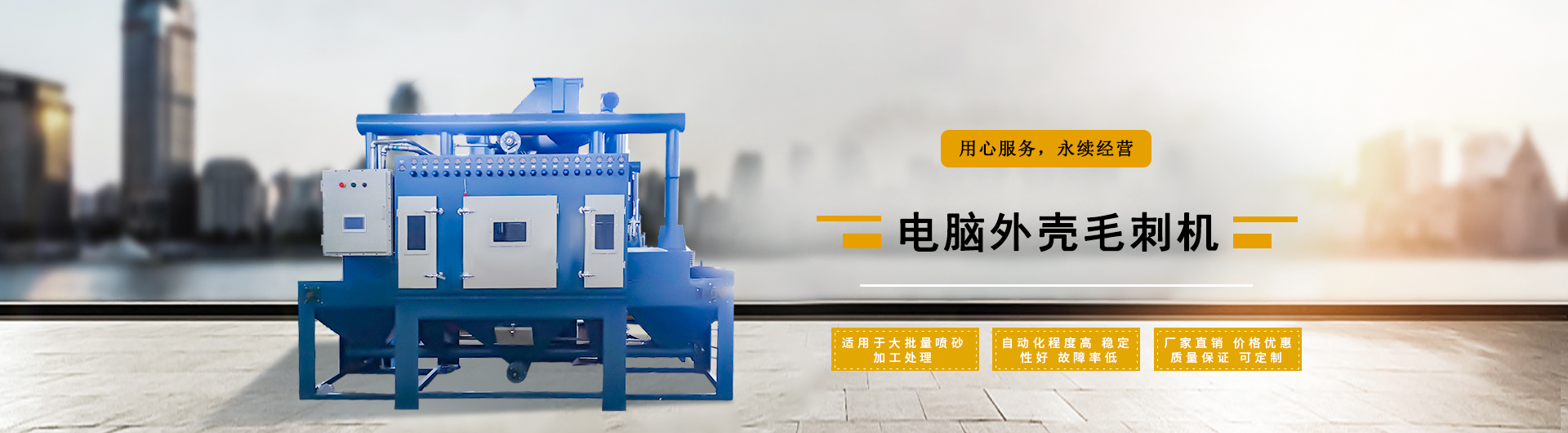
Introduction: the installation and debugging of a sandblasting machine ordered by a hardware screw manufacturer.
The whole process of installation and debugging of sandblasting machine in hardware screw manufacturer
As the key equipment for surface treatment of hardware screws, the standardization of installation and debugging directly affects the treatment effect of screw rust removal, deburring and surface roughness. The following is a detailed operation guide from preliminary preparation to final acceptance:
First, the preparation work before installation
1. Site and environmental planning
Space requirements:
The floor space of the equipment needs to be reserved enough space according to the model (such as drum, turntable and box), usually it needs 5-10m2 for a single machine, and an operation channel of more than 1.5m should be reserved around it, and the height should meet the requirements of dust removal pipeline installation (at least ≥2.5m from the roof).
Bearing capacity of the ground: the weight of the whole sandblasting machine (including sand) is about 500-2000kg, and the ground needs to be hardened (concrete strength ≥C25), and steel plates or anchor bolts are laid for fixation if necessary.
Environmental conditions:
Avoid damp and dusty areas, and keep the indoor temperature at 5-40℃ and the humidity ≤85% to prevent electrical components from being damaged by moisture.
Keep away from vibration sources (such as stamping equipment) so as not to affect the sandblasting accuracy.
2. Inventory of equipment and accessories
Inspection of main equipment: check the model and specification of sandblasting machine (such as the size of working cabin and the number of sandblasting guns), and check whether there are problems such as bumping and weld cracking in the fuselage.
Parts list:
Accessories types, common items, precautions
The displacement of power system air compressor, air pipe and pressure gauge air compressor shall match the number of sand blasting guns (≥ 0.6m/min/gun).
The material of sand tank, sand blasting gun and nozzle (φ 6-φ 10 mm) of sand blasting system is boron carbide, and the wear life is ≥500 hours.
The filtering accuracy of bag filter, fan and pipeline filter bag in dust removal system is ≤5μm, and the fan air volume is ≥ 3000m/h.
The electrical cabinet, PLC and sensor of the control system shall check whether the line identification is clear and the grounding resistance is ≤4Ω.
Preparation of sand material: sand material (such as quartz sand for carbon steel screws and glass beads for stainless steel screws) is selected according to the screw material, and the particle size is 0.5-1.2mm, and the filling amount is 2/3 of the volume of the sand material tank.
Second, the installation process and technical points
1. Host positioning and fixing
Leveling calibration: adjust the levelness of the fuselage with a spirit level, with an error of ≤0.5mm/m, and put a metal gasket or a damping foot pad under the foot of the fuselage to prevent vibration and displacement during operation.
Grounding treatment: the fuselage metal shell needs to be connected with an independent grounding wire (cross-sectional area ≥ 6mm) to avoid the risk of sand explosion caused by electrostatic accumulation.
2. The pipeline is connected with the circuit
Compressed air system:
The distance between the air compressor and the sand blasting machine shall be ≤10m, the air pipe shall be made of pressure-resistant rubber pipe (working pressure shall be ≥0.8MPa), and the pipe interface shall be sealed (raw material belt+sealant) to prevent the sand blasting pressure from being insufficient due to air leakage (standard pressure is 0.5-0.7MPa).
Install gas-water separator and pressure gauge, and drain water regularly (once every 2 hours) to avoid water mixing with sand to block the nozzle.
Installation of dust removal system:
The dust collector should be 1-2m higher than the sandblasting machine, and the pipeline slope should be ≥ 3 to reduce dust accumulation; The pipeline interface is connected by flange, the sealing ring is intact, and the air leakage rate is ≤5%.
The fan impeller needs to be tested for dynamic balance, and the noise during operation is ≤85dB to avoid overload operation.
Circuit connection:
The electrical cabinet is connected to a 380V three-phase five-wire power supply, and the zero line and the ground wire are strictly separated. The rated current of the leakage protector is ≥ 1.5 times of the total power of the equipment.
Sensors (such as sand level sensor and pressure sensor) need to pass through metal bellows to prevent wear and short circuit.
3. Installation of auxiliary devices
Automatic feeding system (optional): If it is a roller sandblasting machine, it is necessary to adjust the inclination angle of the roller (5-10) to ensure that the screws roll at a uniform speed and avoid accumulation of dead angles.
Recovery system: the pipe diameter of sand recovery pipeline shall be ≥100mm, and the elbow radian shall be ≥R500mm, so as to prevent sand blockage, and the recovery efficiency shall be ≥90%.
Third, debugging steps and parameter optimization
1. Single machine no-load test run
Power system test:
Start the air compressor, and observe whether the pressure is stable at 0.6-0.7MPa, and there is no air leakage at the joint of the trachea (it can be detected by soapy water smear).
Turn on the dust removal fan, check whether the air volume reaches the standard, the filter bag is not damaged, and the pulse dust removal device (if any) needs to be automatically injected every 10 seconds.
Control system test:
The buttons on the operation panel (start/stop, sand blasting/dust removal mode) are responsive, and the logic of PLC program is correct (for example, sand blasting and dust removal are linked to start).
After the emergency stop button is pressed, the equipment needs to stop within 1 second, and the alarm indicator lights up normally.
2. Load debugging and process parameter setting
Sand circulation test:
Inject an appropriate amount of sand into the sand tank, start the sand blasting gun, and observe whether the sand is sprayed evenly without pulse spraying (indicating that the pipeline is not blocked).
After the recovery system runs for 30 minutes, check whether the liquid level of the sand tank is stable to avoid "empty suction" (the recovery wind speed should be adjusted when the recovery volume is less than the ejection volume).
Optimization of sandblasting parameters:
Influence of parameter type debugging method and standard on screw treatment
The sandblasting pressure is gradually increased from 0.4MPa, and the surface roughness (Ra 6.3-12.5 μ m) of the test screw is too low to remove rust thoroughly, and too high will easily lead to screw deformation.
The distance between sandblasting and nozzle and screw is 100-150mm, and if the angle is 45-60, the surface will be damaged if it is too close, and the efficiency will be reduced if it is too far away.
Batch test of sandblasting time: 3-5 minutes/batch. It is not enough to observe the effect of screw dead angle treatment, and burr remains, which will affect production efficiency if it is too long.
Automatically run tests:
Start the cycle of automatic feeding-sandblasting-recovery-unloading, and run continuously for 2 hours. Check the stability of the system, and the qualified rate of screw treatment should be ≥95% (no leakage or excessive sandblasting).
3. Security function verification
Interlocking protection: When the working hatch is opened, the sandblasting system needs to stop automatically to prevent people from being injured by sand splashing.
Overload protection: If the recovery pipeline is blocked artificially, the equipment should give an alarm and stop within 30 seconds to avoid motor burning.
Four, common troubleshooting and solutions
Possible causes of fault phenomena and solutions
Insufficient sandblasting pressure, insufficient displacement of air compressor/air leakage in air pipe. Replace the large displacement air compressor and check the sealing interface.
The nozzle blocked sand is wet/the particle size is too large to dry the sand, and the sand that meets the specifications is screened.
Poor dust removal effect: the filter bag is blocked/the air volume of the fan is insufficient. Clean or replace the filter bag and check the tightness of the fan belt.
If the surface of the screw is damaged, the sand blasting pressure is too high/too close, reduce the pressure to 0.5MPa, and adjust the nozzle distance.
Abnormal vibration of equipment, loose anchor bolts/imbalance of fan impeller, tighten bolts, and make dynamic balance correction for impeller.
Five, acceptance criteria and training points
1. Installation acceptance index
Performance indicators:
Sandblasting efficiency: the throughput is more than or equal to 90% of the rated value (for example, the designed throughput is 500kg/h and the measured throughput is more than or equal to 450 kg/h);
Surface quality: the surface of the screw is free of oil stain and rust, and the roughness is uniform, which meets the process requirements (for example, Ra≤6.3μm is required for electroplating pretreatment).
Safety indicators:
When the equipment is running, the noise is ≤85dB, and the dust emission concentration is ≤ 30mg/m (in line with occupational exposure limits of harmful factors in industrial sites (GBZ 2.1-2019);
Insulation resistance of electrical system is ≥1MΩ, and grounding resistance is ≤4Ω.
2. Operator training
Operating specifications:
Start-up sequence: dust removal fan → air compressor → sandblasting system; Stop the machine in reverse order to prevent sand from remaining in the pipeline.
Sand replacement cycle: after every 5-8 batches of screws are processed, the abrasion of sand particle size is detected, and new sand is replenished in time (the ratio of new sand to old sand is ≤3:1).
